
What Is Tree Cabling? A Homeowner's Guide to Saving At-Risk Trees
Mature trees can add up to 15% to a property's value, according to the USDA Forest Service. But what happens when a backyard oak starts showing signs of structural weakness? For many homeowners, tree cabling offers a way to preserve these assets rather than remove them.
Understanding what tree cabling is helps you make informed decisions about protecting your trees and your property. This guide explains how tree cabling works, when it makes sense, how long it lasts, and why certified arborists handle this specialized work.
What is Tree Cabling?
Tree cabling is a support system that uses flexible steel cables installed high in a tree's canopy. These cables reduce stress on weak branches or split trunks. Arborists attach hardware to two or more limbs. The connection limits movement during storms and wind. This technique helps prevent branch failure without removing the tree.
Cabling works best on trees with structural defects like co-dominant stems, included bark, or storm damage. Professional installation typically lasts 7–15 years depending on conditions, with inspections recommended every one to three years. Tree cabling preserves mature trees that might otherwise require removal.
How Tree Cabling and Bracing Work
Steel cables are installed in the upper two-thirds of the tree canopy. This placement connects limbs where they need the most support. The cables redistribute weight and stress between branches. When wind pushes one limb, the cable transfers some of that force to a stronger limb.
Bracing works differently. Arborists drill threaded steel rods through weak branch unions. These rods hold splitting trunks or cracked limbs together. Bracing adds rigid support where cabling alone may not be enough.
There are two main cable systems:
Dynamic cables allow some natural movement. They absorb shock during storms.
Static cables hold limbs in a fixed position. They provide maximum restriction for severely weakened trees.
Cabling supports the tree. It does not fix the underlying structural problem. The weakness remains. The cable simply reduces the chance that weakness leads to failure.
During inspections, we often find old cables that were not tensioned properly. Loose cables offer little protection. Overtightened cables can damage bark and restrict growth. Correct tension matters as much as correct placement.
Cabling
What it uses: Flexible steel cables
Where it's installed: Upper canopy between limbs
How it helps: Limits movement, redistributes stress
Best for: Co-dominant stems, heavy limbs
Bracing
What it uses: Threaded steel rods
Where it's installed: Through weak unions or cracks
How it helps: Holds splitting wood together
Best for: Cracked trunks, split unions
Now that you understand how cabling works, let's look at the situations where it makes the most sense.
When Should a Tree Be Cabled?
Not every tree needs cabling. The system works best when specific structural problems are present. Here are the signs that suggest your tree may be a candidate.
Co-dominant stems are two main trunks growing from the same point. They compete for dominance. The joint between them is often weak. Cabling connects the two stems higher up to reduce stress on that weak union.
Included bark happens when bark gets trapped inside a branch union. You may see a dark crease or ridge where two limbs meet. This bark prevents the wood from fusing properly. The joint is much weaker than it looks.
Heavy limbs over structures pose a risk even on healthy trees. If a large branch extends over your roof, driveway, or patio, cabling can limit how far it moves in a storm. This reduces the chance of damage if the limb drops.
Previous storm damage may have weakened your tree's structure. Cracks, splits, or torn bark create entry points for decay. Cabling can stabilize the damaged area while the tree heals.
High-value mature trees are often worth saving. A 50-year-old shade tree cannot be replaced quickly. Cabling may extend its safe lifespan for many more years.
Signs Your Tree May Need Cabling
Two or more trunks growing from the same spot
A visible crease or bark ridge where branches meet
Large limbs hanging over your home, garage, or gathering areas
Cracks or splits from past storms
Leaning branches that were not leaning before
If your tree is a good candidate, you're probably wondering how long the system will last.
How Long Does Tree Cabling Last?
A properly installed cable system typically lasts 7–15 years. The exact lifespan depends on several factors. Cable type, tree species, and local weather all play a role. Some high-grade steel systems can last 20 years or more with proper care.
Trees keep growing after cables are installed. The trunk and branches add new wood each year. This growth changes the tension on the cables. Hardware that fit correctly five years ago may be too tight today. That is why regular inspections matter.
The International Society of Arboriculture recommends inspections every one to three years. During an inspection, an arborist checks cable tension and hardware condition. They look for signs of wear, rust, or bark growing over the attachment points. If the cables are too loose, they offer little protection. If they are too tight, they can cut into the wood and cause damage.
Several factors affect how long your cables will last:
Tree species – Fast-growing trees need more frequent adjustments than slow-growing ones.
Growth rate – Young, vigorous trees put more stress on cables than mature trees with slower growth.
Weather exposure – Trees in windy locations or areas with frequent storms experience more cable wear.
Cable material – Higher-grade steel and modern hardware tend to last longer than older systems.
Think of cabling as ongoing maintenance rather than a one-time fix. The system needs attention over the years. We have maintained cable systems on some Kuna properties for 15 or more years with regular check-ups. Consistent care extends the life of both the cables and the tree.
The short answer is yes—but only when the job is done right.
Does Cabling a Tree Really Work?
Yes. Tree cabling works when it is properly installed on the right tree. The system reduces the risk of branch failure by limiting how far limbs can move. Less movement means less stress on weak unions.
Cabling is not a guarantee. Severe storms can still cause damage. A direct hit from high winds or heavy ice may overwhelm any support system. But cabling shifts the odds in your favor. A tree that might have failed in a moderate storm can often survive with proper support.
Success depends on correct assessment before installation. Not every tree is a good candidate. Some trees have decay hidden inside the trunk. Others have root problems that cabling cannot address. An arborist must evaluate the whole tree before recommending cables.
Improper installation can cause more harm than the original problem. Cables placed too low do not provide enough support. Hardware installed incorrectly can girdle branches over time. Girdling cuts off the flow of water and nutrients. The branch slowly dies.
Drilling into the wrong location can also introduce decay. Each hole creates an entry point for fungi and bacteria. A trained arborist knows where to drill and how to minimize damage.
The bottom line: cabling works when the right tree gets the right system installed by someone who knows what they are doing. Skipping any of those steps reduces the chance of success.

Why Hire a Certified Arborist for Tree Cabling
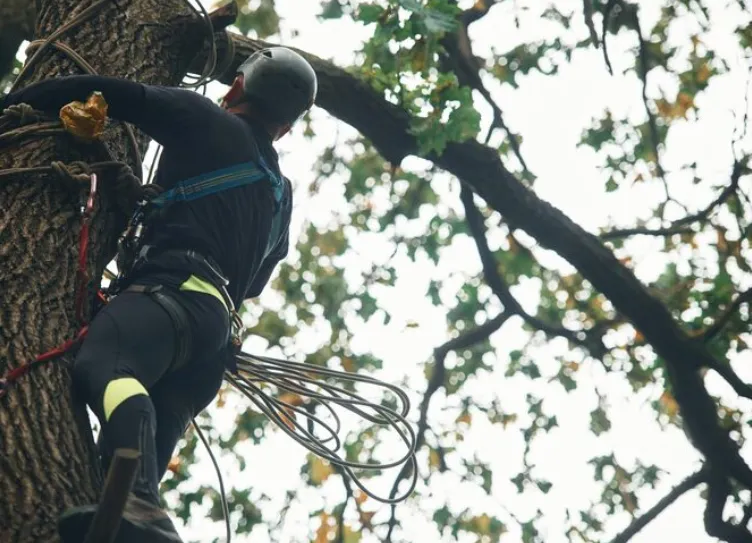
Tree cabling requires working at height. Climbing 30 or 40 feet into a canopy is dangerous without proper training. Certified arborists have the skills and safety equipment to do this work correctly.
Incorrect cable placement causes long-term problems. A cable installed in the wrong spot can girdle a branch as the tree grows. It can also create wounds that invite decay. These mistakes may not show up for years. By then, the damage is done.
An arborist does more than install hardware. They assess whether cabling is even the right choice. Sometimes removal is the safer option. A tree with internal decay or severe root damage may not be worth saving. An honest evaluation protects you from investing in a system that will not help.
ISA certification means the arborist stays current on industry standards. The International Society of Arboriculture updates its guidelines as research improves. Certified professionals follow these best practices. They know which cable systems work best for different situations.
DIY cabling attempts often make things worse. Homeowners may choose the wrong hardware or install it at the wrong height. They may overtighten cables or drill into decay pockets. What starts as a cost-saving effort can end with a bigger problem and a higher bill.
What to Expect During a Professional Cabling Assessment
A full inspection of tree structure from ground to canopy
Identification of weak points, decay, or previous damage
Honest recommendation on whether cabling or removal makes more sense
A written estimate explaining the proposed system
A timeline for installation and future inspections
Our team has installed cable systems on properties throughout Kuna and the surrounding Treasure Valley. We assess every tree individually because no two situations are identical.
Ready to Protect Your Trees?
If you have noticed leaning branches, cracked trunk junctions, or general instability, do not wait for the next storm to cause problems. Priceless Tree Care is ready to secure your trees and protect your property.
Contact us to schedule your tree assessment today!
